Showing posts with label Proton. Show all posts
Showing posts with label Proton. Show all posts
Tuesday, March 8, 2011
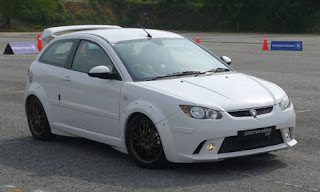
Proton Satria Neo R3 officially launched
Proton's what you know Malaysian manufacturer which owns Lotus. Well, the manufacturer has officially unveiled a new version of its Satria Neo, the R3.This self that we have here essentially for its involvement in rallying in the series IRC adopts a sporty look. The R3 Satria Neo has been developed by Proton's Motorsports Division.Under the hood, this is not a flood of power that fidgeting with

Saturday, November 13, 2010
Proton Satria Neo S2000

After launching the Proton Exora President (premium) in the arena and IIMS 2010, Proton will also launch the Proton Neo S2000 Satrio hatchback engine capacity of 1600 cc 2 doors.
The plan will be launched Proton cars 20 November 2010 in Jakarta next. Cars are imported directly from Malaysia.
"20 November we launched the Proton Neo S2000 Satrio 1600 cc. The plan at the mall," said General Manager of PT Proton circulation Indonesia detikOto Mazlan told last weekend.
Proton Neo S2000 Satrio hatchback 1600 cc engine brings the Campro CPS was asked as a racing engine by Proton. Protons enter the two variants namely the transmission of both automatic and manual.
Mazlan explained, the price of Proton Satrio Neo S2000 is 1600 cc in accordance with the concept promoted. Proton Neo S2000 Satrio 1600 cc automatic cost Rp 198 million, while Proton Neo S2000 Satrio 1600 cc manual will priced USD 188 million.
"The price is very competitive and appropriate, USD 198 million for the automatic and manual USD 188 million," said Mazlan.
Mazlan hartchback two door car believed there were no rivals in Indonesia. Because different specification promoted by the cars on the market four-wheel Indonesia.
"This car is no match for him in Indonesia. Specified car in RI does not have the same with our cars that will be marketed. And the buyers are also very segmented," Mazlan believes.
Friday, September 17, 2010
Proton Satria Neo S2000 To Come in Indonesia

Proton Satria Neo S2000 To Come in Indonesia
Proton confirm about to release Proton Satria Neo CPS in Indonesia, however Proton will also to release Proton Satria Neo S2000 soon.
The Malaysia’s car would be powered with engine 1600 cc Campro CPS automatic and manual transmission.
The automatic transmission cost of this car would about 198 million rupiah while the manual would cost about 188 million rupiah.
tag: Proton Satria Neo S2000 Indonesia, Harga Proton Satria Neo S2000, Proton Satria Neo S2000 Price, Spesifikasi Proton Satria Neo S2000, Proton Satria Neo S2000 Specification, Proton Satria Neo S2000 Malaysia, Proton Neo S2000, Mobil Proton, Proton Car, Proton Neo S2000 Harga Price Indonesia
Proton Satria Neo CPS To Hit Indonesia Auto Market Starting September 20
Proton Satria Neo CPS To Hit Indonesia Auto Market Starting September 20
Proton Satria Neo CPS confirmed about to hit Indonesia auto market about September 20.
Proton Satria Neo CPS, in Malaysia, comes in automatic and manual trasmissionn with engine Campro CPS 1,600 cc, capable of generating 125 PS at 6,500rpm and 150Nm of torque at 4,500rpm, figures which are up from the standard Campro’s 110hp and 148Nm.
Here are the price of this car in Malaysia:
Proton Satria Neo CPS M/T (white) – RM 57,313.00
Proton Satria Neo CPS M/T (black) – RM 57,763.00
Proton Satria Neo CPS A/T (white) – RM 60,313.00
Proton Satria Neo CPS A/T (black) – RM 60,763.00
tag: Harga Proton Neo CPS, Proton Neo CPS Indonesia, Harga Proton Satria Neo CPS, Proton Satria Neo CPS Price, Spesifikasi Proton Satria Neo CPS, Proton Satria Neo CPS Specification, Review Proton Satria Neo CPS, Proton Satria Neo CPS Indonesia, Proton Satria Neo CPS Malaysia, Mobil Proton, Proton Car, Proton Satria Neo CPS Matick, Proton Satria Neo CPS Manual,
Thursday, July 15, 2010
Proton GEN-2, 2008


Having acquired a majority share in Group Lotus Plc in 1996 and a full share in 2003, Proton have combined the sporting heritage of Lotus with its own strengths to create the Proton GEN-2 - a car that offers far more than the average family car.
Carefully integrating the values of Proton, Lotus has helped to produce an exciting car designed for both performance and functionality, as designers and engineers deliberately chose to stray from the traditional approach of building a single car for the mass market. This integration has also become more physically visible in the Proton GEN-2 by way of the car's more modern, masculine and sporty character in terms of exterior and interior styling as well as in performance.
While Lotus presence in the older range of vehicles like the Proton Satria GTi was limited to its superior ride and handling performance, its contributions have become more visible in the Proton GEN-2 and in current Proton cars, particularly the Satria Neo. The Lotus influence is evident in the GEN-2, from underlining new and higher standards related to performance and occupant safety to sculpturing the overall look and feel of the car from both the interior and exterior.
Designed as a five-door hatchback, the Proton GEN-2 was the first of the new line of Proton cars and the first national car to be fitted with a Malaysian designed, blue-printed and commercially built engine, developed in close collaboration with Lotus.
Proton introduced the latest addition to the GEN-2 line-up in March 2008, with the launch of the Proton GEN-2 Persona saloon into the UK. The GEN-2 saloon combines the excellent performance, ride and handling of the GEN-2 hatchback, but with the added sophistication and functionality that comes with owning a 4-door family car.
Carefully integrating the values of Proton, Lotus has helped to produce an exciting car designed for both performance and functionality, as designers and engineers deliberately chose to stray from the traditional approach of building a single car for the mass market. This integration has also become more physically visible in the Proton GEN-2 by way of the car's more modern, masculine and sporty character in terms of exterior and interior styling as well as in performance.
While Lotus presence in the older range of vehicles like the Proton Satria GTi was limited to its superior ride and handling performance, its contributions have become more visible in the Proton GEN-2 and in current Proton cars, particularly the Satria Neo. The Lotus influence is evident in the GEN-2, from underlining new and higher standards related to performance and occupant safety to sculpturing the overall look and feel of the car from both the interior and exterior.
Designed as a five-door hatchback, the Proton GEN-2 was the first of the new line of Proton cars and the first national car to be fitted with a Malaysian designed, blue-printed and commercially built engine, developed in close collaboration with Lotus.
Proton introduced the latest addition to the GEN-2 line-up in March 2008, with the launch of the Proton GEN-2 Persona saloon into the UK. The GEN-2 saloon combines the excellent performance, ride and handling of the GEN-2 hatchback, but with the added sophistication and functionality that comes with owning a 4-door family car.
Proton Impian, 2006


 From the initial design sketches, through prototyping and development to production of the Proton Impian, first passenger car to be created entirely in Malaysia, Proton engineers have set out to reward owners with a driving experience in the highly competitive D sector that is second to none.
That they have succeeded is due in no small measure to a unique combination of engineering excellence and design flair. Proton's pragmatic approach to worldwide market requirements blends the best of Malaysian creativity with European engineering precision and Japanese manufacturing skills.
To create a safe and soothing environment for driver and passengers, Proton engineers have been supported by a Malaysian-based project team established by EDAG, the German body engineering specialists, while the Proton Impian's ride comfort and pin sharp handling reflect the silky skills of Lotus suspension tuning experts previously paraded in Proton's acclaimed Satria GTi.
The result is a car with clean, crisp styling that provides occupants with impressive safety standards and drivers with full control, no matter what the conditions. The reinforced body structure is among the strongest in its class, giving greater torsional rigidity for less body roll, better road-holding and a solid, European feel to the driving experience.
Setting even higher quality standards, the Proton Impian is manufactured using the latest modular construction techniques in a new factory alongside Proton's main plant at Shah Alam near Kuala Lumpur. Modular integration allows each module to be stronger and more rigid, at the same time reducing weight.
All Proton's first home-grown product demonstrates a maturity and level of competence not previously expected of the youngest Pacific rim manufacturer to make its mark in a global market place. With the opening of a £62 million Research and Development Centre at Shah Alam two years ago, Proton has the capability to design vehicles in-house from concept to production, using the latest CATIA design and simulation work stations together with a rapid prototyping facility to halve component design time and dramatically reduce costs.
A state of the art emissions laboratory at the centre is fully approved by the UK's Road Transport Department Vehicle Certification Authority, while sophisticated suspension compliance and measurement rigs coupled with training from Lotus specialists has given Proton engineers the ability to achieve world-class ride and handling standards.
Malaysia's primary national car manufacturer has come a long way since the first Mitsubishi-based car rolled off the production line in 1985 and the Proton Impian personifies a new ambition to produce products that are technically advanced, great value and satisfying to drive.
The Proton Impian range will be later expanded with higher derivative variants, while a whole new generation of powerful yet highly efficient engines unveiled recently by Lotus is being readied for use in 2003.
A range of derivative models is currently under development at the R & D Centre, and Proton is also planning the launch of a mid-engined 2+2 sports car based on the Lotus M250 chassis in two years time.
Proton GEN-2, 2004


Following Proton Berhad's acquisition of a 100 per cent controlling interest in Group Lotus Plc, personnel from the British sports car manufacturer's engineering division have been closely involved in the development programme of GEN-2; both at the Lotus headquarters in Hethel and at Proton's £62 million vehicle design and development centre in Malaysia.
The Proton GEN-2 has been styled to attract a wider customer base; the Lotus Design Studio has had a major influence on the design of the curvy muscular bodywork that looks simply sensational in a range of new colours. From the bee sting aerial to the dashboard instrument panel, reminiscent of the Lotus roundel, the GEN-2's sporting pedigree is undeniable.
The 1.6 litre CAMPRO engine, designed in collaboration with Lotus, delivers exceptional torque output. The double overhead-camshaft engine produces 110bhp.
Power is matched by agility, with handling developed by Lotus. The Proton GEN-2 has outstanding stability when cornering and changing lanes, making it an exciting, responsive drive while maximising passenger comfort.
Sleek, sporty lines continue throughout the interior. The design combines ergonomic comfort with classic minimalism, while exclusive touches from Blaupunkt have brought fingertip controls to life.
Optimal protection is provided by increased body rigidity and strategic crumple zones. Four-wheel ABS on the GSX model ensures stability and good braking performance, whilst the Electronic Brake force Distribution (EBD) system prevents wheel lock up as the driver makes avoidance manoeuvres whilst braking.
The Proton GEN-2 has been styled to attract a wider customer base; the Lotus Design Studio has had a major influence on the design of the curvy muscular bodywork that looks simply sensational in a range of new colours. From the bee sting aerial to the dashboard instrument panel, reminiscent of the Lotus roundel, the GEN-2's sporting pedigree is undeniable.
The 1.6 litre CAMPRO engine, designed in collaboration with Lotus, delivers exceptional torque output. The double overhead-camshaft engine produces 110bhp.
Power is matched by agility, with handling developed by Lotus. The Proton GEN-2 has outstanding stability when cornering and changing lanes, making it an exciting, responsive drive while maximising passenger comfort.
Sleek, sporty lines continue throughout the interior. The design combines ergonomic comfort with classic minimalism, while exclusive touches from Blaupunkt have brought fingertip controls to life.
Optimal protection is provided by increased body rigidity and strategic crumple zones. Four-wheel ABS on the GSX model ensures stability and good braking performance, whilst the Electronic Brake force Distribution (EBD) system prevents wheel lock up as the driver makes avoidance manoeuvres whilst braking.
Sunday, March 14, 2010
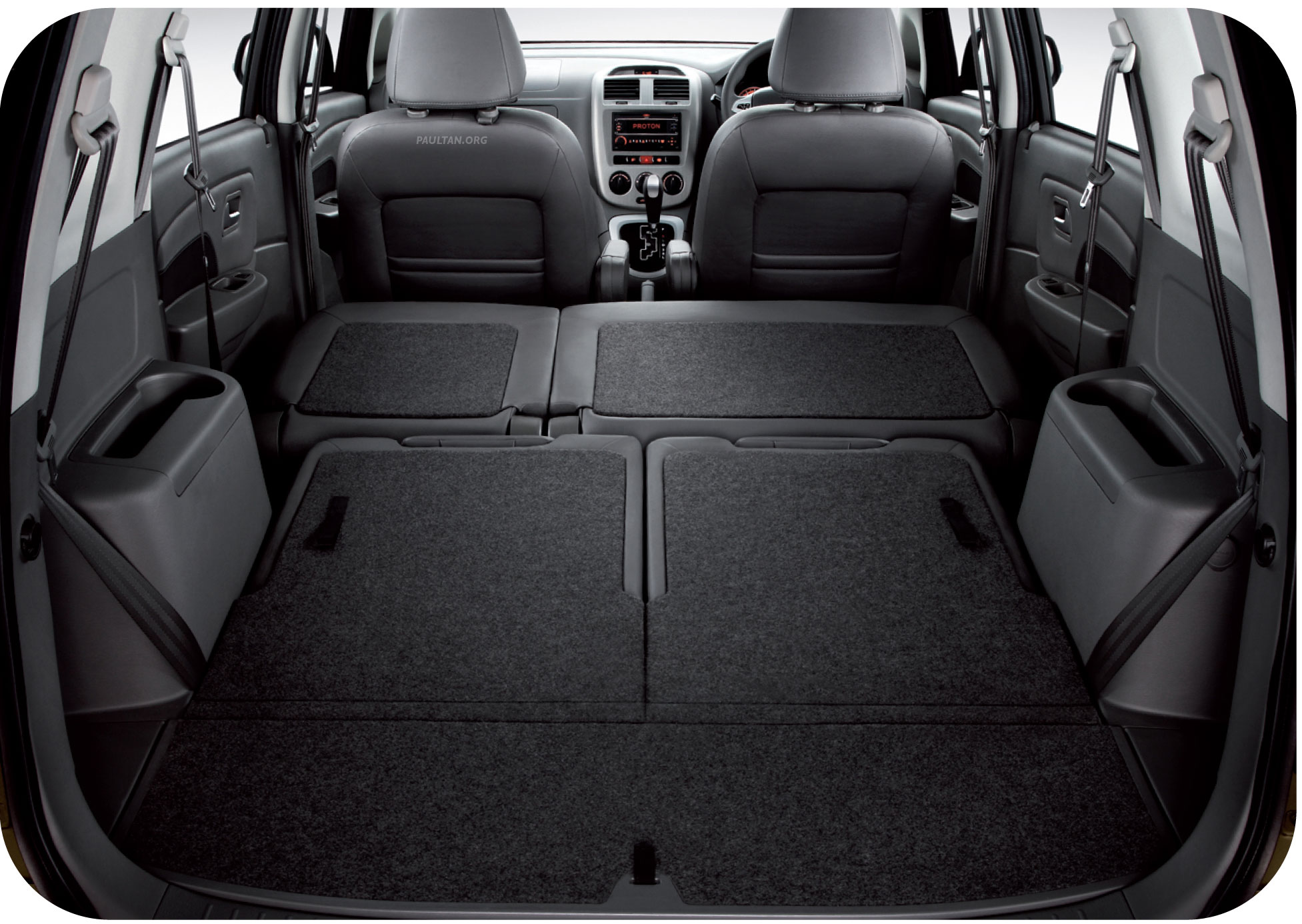
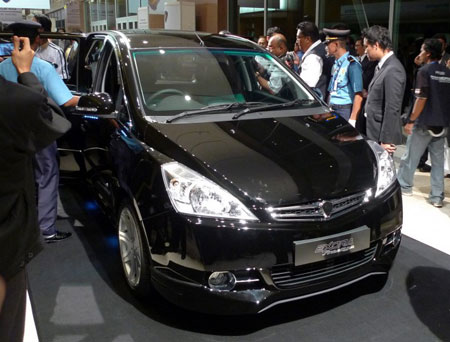
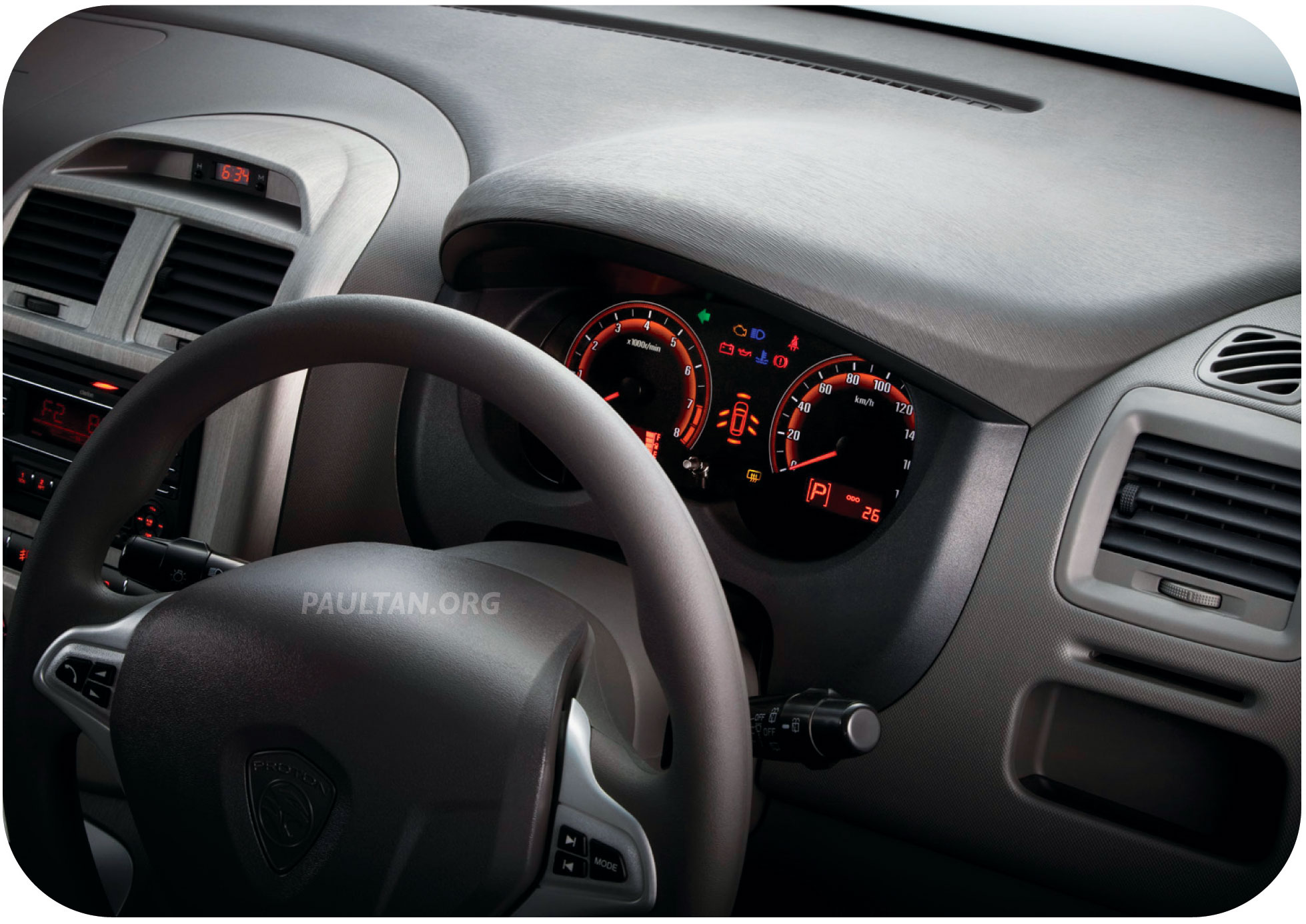
The Elegant Car Of Proton Exora
 Proton Exora
 Proton Exora
 Proton Exora
 Proton Exora
 Proton Exora
 Proton Exora
Subscribe to:
Posts (Atom)